Advanced Hockey Training Techniques
For experienced players looking to take their game to the next level, advanced training techniques are essential. Here are some strategies to enhance your performance on the ice.
1. Advanced Video Analysis for Self-Coaching
One of the biggest game-changers for experienced players is reviewing your own footage with purpose. Don't just watch highlights — break down mechanics.
- Record games or practices (use apps like Hudl, Onform, or even phone slow-mo for quick sessions).
- Focus on key areas: stride efficiency (are you getting full extension and glide?), edge transitions, puck protection under pressure, or gap closing as a defenseman.
- Tools like drawing annotations help spot subtle flaws, such as early weight transfer or lazy stick positioning.
- Compare your clips to NHL/WHL players in similar situations (e.g., analyze Erik Karlsson's edge work for defensemen or Connor McDavid's acceleration for forwards).
Regular video review builds self-awareness and accelerates improvement faster than ice time alone.
2. Plyometric & Explosive Power Training (Off-Ice Focus)
To skate faster and explode out of turns, build reactive power with plyometrics tailored for hockey. Our Summer Track Program emphasizes these to develop the explosive first steps needed at higher levels.
- Skater Bounds / Lateral Bounds: Mimic crossover starts — bound side-to-side explosively, landing softly to train quick direction changes. 3 sets of 8–10 per side.
- Box Jumps or Depth Jumps: Jump onto a 18–24" box, focus on triple extension (ankles, knees, hips) like a powerful stride push. Add a lateral bound on landing for agility.
- Single-Leg Hops or Alternating Lunge Jumps: Build unilateral power to prevent imbalances that slow you down.
- Key: Prioritize quality over quantity — full recovery between reps (60–90 seconds) to maintain max explosiveness. Combine with our off-ice conditioning for best results.
These build the "smooth power" that elite skaters feel effortless on the ice.
3. Position-Specific Drills at Game Speed
Generic drills won't cut it anymore. Advanced players need drills that replicate real-game chaos.
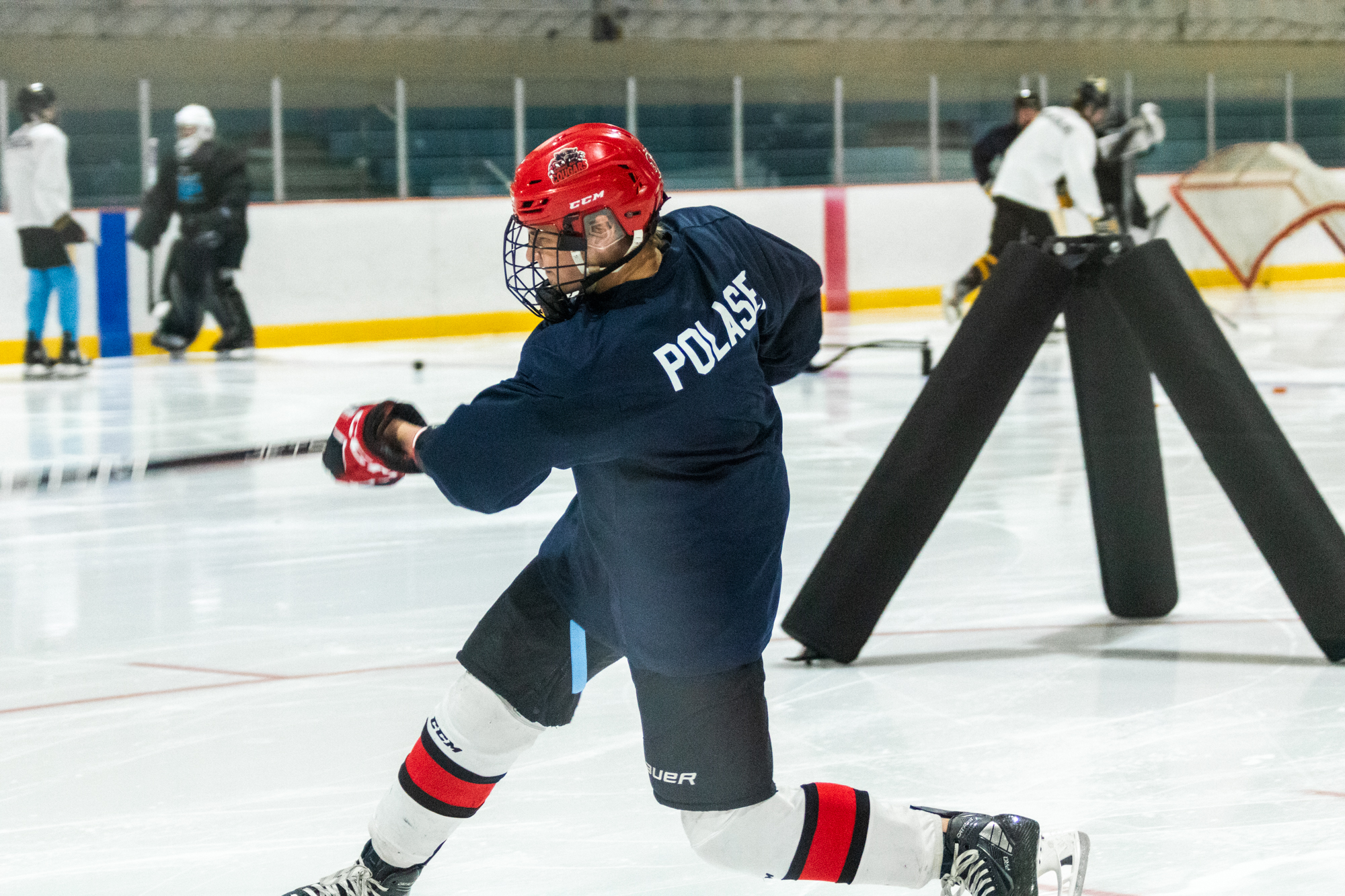
- Forwards: Practice quick-release shots off the rush, deceptive puck protection (e.g., Marner Mohawk variations or Svechnikov-style toe drags into shots), and net-front battles.
- Defensemen: Work on gap control, angling, pivots under pressure, and backward crossovers into transitions (e.g., inside-edge elbow drills or figure-8 tight turns with puck).
- All Positions: Incorporate overspeed elements — like partner figure-8s with shots or quick hands + 360 spins — to train under fatigue.
- Flow Hockey twist: Our position-specific camps (e.g., Developing Dynamic Defensemen or Elite Forwards) layer these with powerskating to make skills automatic at full speed.
4. Nutrition, Recovery & Periodization
Peak performance isn't just training — it's recovery. Elite players treat their body like a pro machine.
- Fuel with high-protein meals (lean meats, eggs, Greek yogurt), complex carbs (oats, sweet potatoes), and anti-inflammatory foods (berries, fatty fish). Hydrate aggressively — aim for half your body weight in ounces daily.
- Prioritize sleep (8–10 hours) and active recovery (light mobility or yoga on off days).
5. Mental Toughness Training
Develop mental toughness through visualization and mindfulness techniques. NHL stars like Sidney Crosby and Henrik Lundqvist use it routinely in pre-game routines to sharpen reactions and decision-making. This will help you stay focused and composed during high-pressure situations.
Advanced training requires dedication and a willingness to push your limits.